Mirage remains one of the most strategically demanding maps in Counter-Strike 2, where successful attacks depend on precise utility usage, coordinated positioning, and effective timing. For Terrorist teams, attacking the A bombsite can be particularly challenging because Counter-Terrorists have several strong defensive positions, including Ticket Booth, Jungle, Stairs, and Triple Box.
A well-organized A Site execution is not simply about throwing smoke grenades and rushing onto the bombsite. Players must understand how to isolate defenders, clear dangerous angles, and establish post-plant control. This guide explains how to approach an A Site attack on Mirage and improve your team's chances of winning important rounds.
Understanding the Key Positions on Mirage A Site
Before executing an attack, players need to understand the defensive positions that influence A Site control. Each location presents a different threat and requires an appropriate response.
- Ticket Booth: A common position for CT players holding long-range angles toward A Ramp and the bombsite. A smoke grenade can block their vision during the initial attack.
- Jungle: Connects the A Site area with Connector and allows defenders to rotate quickly. Smoking Jungle reduces the risk of being attacked from the side.
- Stairs: Provides an elevated angle overlooking parts of the bombsite. Defenders holding this position can interrupt attackers entering from A Ramp.
- Triple Box: A strong defensive position that offers cover near the bombsite. Attackers must carefully clear this area before planting.
- Under Balcony: A close-range hiding spot where defenders can surprise players entering from A Ramp or Palace.
Recognizing these positions helps attackers anticipate enemy movements rather than reacting only after encountering defenders.
How to Use Smoke Grenades for an Effective A Site Execute
Smoke grenades form the foundation of most structured Mirage A Site attacks. A standard execution often uses three important smokes: CT Spawn or Ticket, Jungle, and Stairs.
The CT smoke blocks an important defensive sightline and makes it more difficult for defenders to challenge attackers from Ticket Booth. Meanwhile, the Jungle smoke limits visibility from Connector and Jungle, reducing the number of angles attackers must watch.
The Stairs smoke is equally important because defenders positioned on the elevated platform can otherwise maintain strong control over players entering the site.
However, timing matters as much as placement. If teammates throw their utility several seconds apart, defenders may exploit temporary gaps. Coordinating all three smokes before initiating the main push creates a more favorable opportunity to enter the bombsite.
Players should also remember that CS2's volumetric smoke system allows grenades and gunfire to temporarily create gaps in smoke clouds. Therefore, smoke grenades should never be treated as completely reliable protection.
Coordinating A Ramp and Palace Entry
One of the most effective ways to attack Mirage A Site is to combine pressure from A Ramp and Palace.
Players entering from A Ramp usually encounter several defensive angles simultaneously. Without support, the first attacker can easily be eliminated by an opponent holding Triple Box, Default, or Under Balcony.
To reduce this risk, the team should assign clear responsibilities.
A Ramp Entry Players
The first player should focus on creating space and identifying nearby defenders. A second player must remain close enough to trade immediately if the entry player is eliminated.
Palace Players
A Palace player can apply pressure from a different elevation, forcing defenders to divide their attention. However, jumping from Palace too early can expose the player to several opponents. Palace pressure becomes more effective when coordinated with the A Ramp entry.
Support Players
Support players should provide flashbangs and additional utility before entering. A well-timed flashbang can temporarily blind defenders watching A Ramp, allowing teammates to move onto the site more safely.
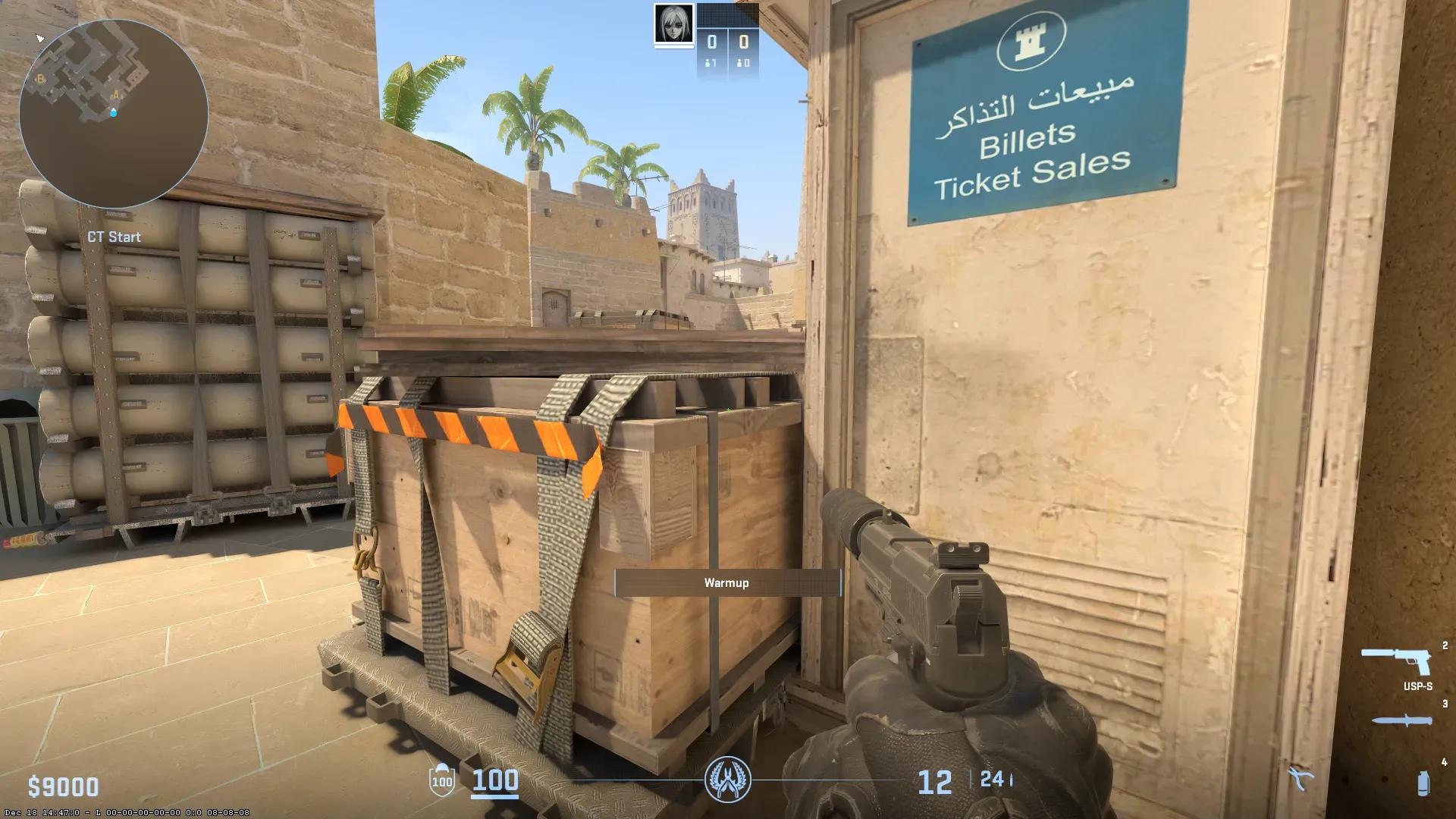
The objective is to establish several attacking angles simultaneously, preventing the defending team from concentrating its firepower on a single entrance.
Using Molotovs to Clear Dangerous Defensive Positions
Molotovs provide an additional advantage during A Site attacks because they can force opponents out of strong defensive positions.
A properly placed Molotov toward Under Balcony can discourage defenders from remaining hidden in that area. Another Molotov targeting a common defensive position near Triple Box may force an opponent to move into a more exposed location.
Players should avoid throwing utility randomly. Each Molotov should have a specific purpose, such as clearing a suspected defender, denying an area temporarily, or delaying a defensive rotation.
Combining fire grenades with flashbangs and coordinated entry movement creates stronger opportunities than using each piece of utility independently.
How to Maintain Control After Planting the Bomb
Securing A Site is only the first part of a successful attack. Many teams lose rounds because they become overly aggressive after planting the bomb.
Once the bomb is planted, attackers should establish a crossfire that covers likely retake routes from CT Spawn, Jungle, and Connector.
Players holding A Ramp can maintain pressure toward the bombsite while retaining an escape route. A teammate in Palace can provide another attacking angle, especially when opponents attempt to clear common post-plant positions.
Communication is essential during this phase. Players should report enemy positions, remaining utility, and whether opponents are attempting to defuse.
Rather than challenging every defender individually, attackers should force the CT team to spend time clearing positions and locating the remaining Terrorists.
Improving Your CS2 Experience With Weapon Skins
Although strategic awareness, aim, and teamwork determine performance, weapon customization remains an important part of the Counter-Strike 2 experience. Many players enjoy personalizing frequently used weapons such as the AK-47, M4A1-S, AWP, and Desert Eagle.
Final Thoughts
A successful Mirage A Site execution requires more than individual aiming ability. Coordinated smoke grenades, carefully timed flashbangs, effective Molotov placement, and simultaneous pressure from A Ramp and Palace can significantly improve attacking opportunities.
Players who understand the purpose of each utility deployment and maintain disciplined post-plant positioning will find it easier to execute consistent strategies. Practicing these techniques with teammates can turn Mirage A Site attacks into a reliable part of any competitive CS2 playbook.
|